
Quick Answer: How Can You Sleep Better on a Plane?
If you’re wondering how to sleep better on a plane, the key is to reduce light, noise, physical discomfort, and other common sleep disruptions.
To sleep better on a plane, reduce light and noise, support your head and neck, dress comfortably, stay hydrated, limit alcohol and late caffeine, and try to sleep according to the local nighttime at your destination.
For long-haul travel, your goal does not need to be perfect sleep. Even creating a quieter, darker, more comfortable environment can make it easier to rest during the flight.
How to Sleep Better on a Plane: Start With the Right Environment
Airplanes combine several things that naturally make sleep difficult.
You are usually sitting more upright than you would in bed. Cabin noise continues throughout the flight. Lights, announcements, other passengers, meal service, turbulence, and an unfamiliar environment can interrupt rest.
Long-distance travel can also disrupt your body clock when you cross several time zones. Jet lag happens when your internal circadian rhythm is no longer aligned with the local day and night cycle at your destination.
That is why sleeping well while traveling is not only about being tired enough. It is also about controlling as many environmental disruptions as possible.
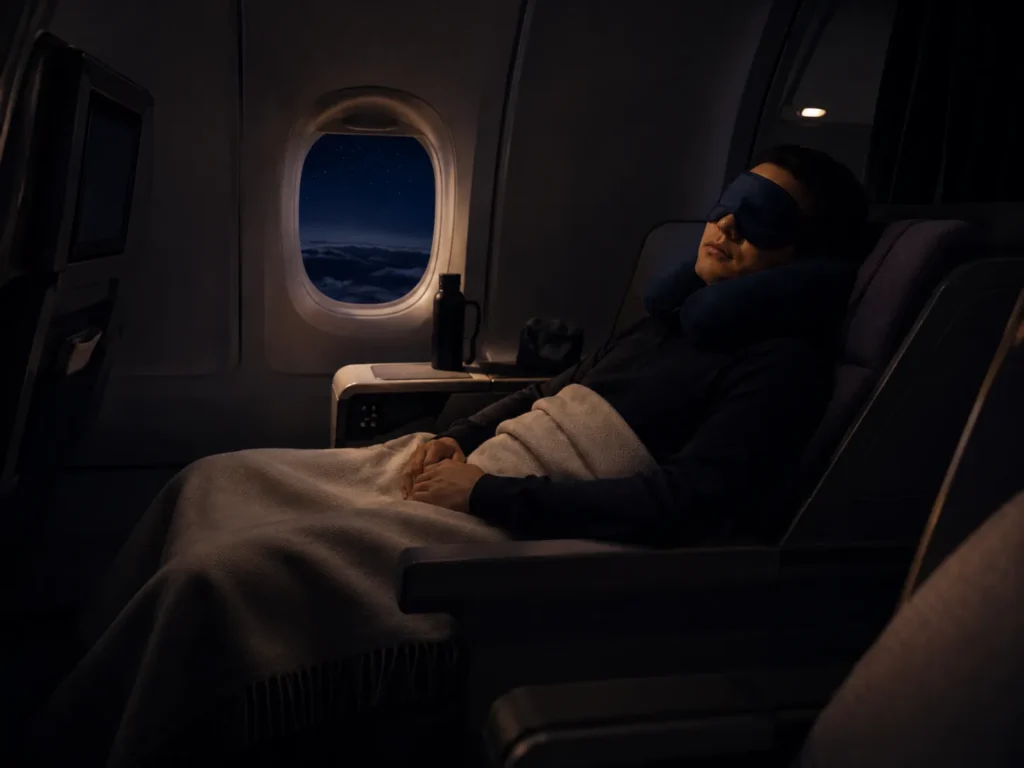
1. Start the Trip Well-Rested
One of the biggest mistakes travelers make is intentionally sleeping less before a long flight because they hope exhaustion will help them sleep on the plane.
That strategy can backfire.
Instead, try to get normal, good-quality sleep during the nights before departure. Starting a long journey already sleep-deprived can make travel fatigue feel even worse.
If your destination is several time zones away, gradually shifting your bedtime toward your destination schedule before departure may also make the transition easier. The CDC recommends going to bed later before westward travel and earlier before eastward travel when practical.
Once you board a long-haul flight, start thinking about the local time where you are going.
If it is nighttime at your destination, that may be your best opportunity to try to sleep.
If it is daytime there, staying awake may make it easier to transition once you land.
This simple change helps you treat the flight as part of your adjustment rather than waiting until arrival to change your schedule.
3. Block Out as Much Light as Possible
Light is one of the strongest signals telling your brain whether it should feel awake or sleepy.
Unfortunately, airplane cabins are full of unpredictable light—from overhead reading lamps and entertainment screens to windows and neighboring passengers’ devices.
A comfortable sleep mask can create a consistently dark environment without depending on cabin lighting.
Look for a mask that:
- Blocks light around the nose
- Feels soft against the skin
- Does not press uncomfortably against the eyes
- Stays in place when you move your head
The goal is simple: give your brain fewer visual reasons to stay alert.
4. Reduce Cabin Noise
Aircraft engines produce continuous background noise, while conversations, announcements, service carts, and passengers create additional interruptions.
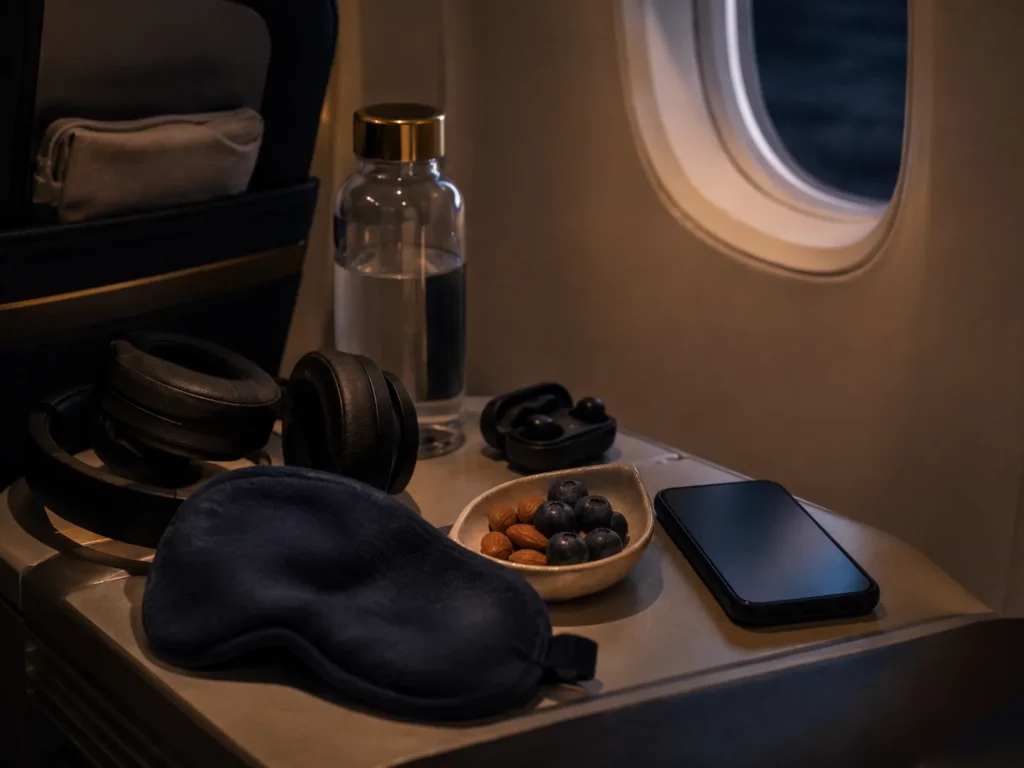
Earplugs or noise-reducing headphones can help create a calmer sound environment.
Some travelers prefer:
- Foam or silicone earplugs
- Noise-canceling headphones
- Quiet instrumental audio
- White noise
- Gentle ambient sounds
The best option is whichever helps you relax without becoming uncomfortable during a long period of use.
5. Support Your Head and Neck
Sleeping upright becomes much harder when your head repeatedly drops forward or sideways.
A supportive travel pillow can reduce this movement and make it easier to stay relaxed.
The ideal support depends on how you naturally sleep while seated. Some travelers prefer traditional U-shaped pillows, while others prefer wraparound or adjustable designs that support the chin as well as the sides of the neck.
If possible, slightly recline your seat without disturbing the passenger behind you. Research reviewed by the Sleep Foundation suggests that greater recline can improve sleep compared with remaining fully upright.
6. Create a Comfortable Temperature
Airplane cabins can feel surprisingly cold during long flights.
Wear breathable layers rather than relying on one heavy piece of clothing. Layers allow you to adjust easily if the cabin temperature changes.
A light sweater, soft socks, or compact travel blanket may help create a more comfortable sleep environment.
Comfort matters because even small physical annoyances can keep you alert when you are already trying to sleep in an unfamiliar place.
7. Stay Hydrated Without Overdoing It
Cabin air is dry, and staying hydrated can help you feel more comfortable during a long journey.
Both the CDC and NHS recommend drinking water during long-distance travel.
At the same time, drinking a very large amount immediately before trying to sleep may mean frequent bathroom trips.
A better approach is to drink water regularly throughout the flight rather than trying to catch up all at once.
8. Be Careful With Caffeine and Alcohol
A glass of wine may make you feel sleepy, but feeling sleepy is not the same as getting good-quality sleep.
Alcohol can disrupt sleep and may leave you feeling less rested later. Both the CDC and NHS recommend limiting alcohol during long-distance travel.
Caffeine can be useful when you need to remain alert, but timing matters.
If you intend to sleep soon, avoid reaching for coffee, energy drinks, or other highly caffeinated beverages close to your planned sleep period.
Think about caffeine according to your destination’s schedule rather than simply drinking it whenever it is offered.
9. Keep Meals Light Before Sleeping
A large, heavy meal can make it harder to become comfortable in a cramped airplane seat.
If you plan to sleep soon after meal service, consider choosing lighter foods and moderate portions.
You do not need to avoid eating entirely. The goal is simply to avoid feeling overly full when you are trying to relax.
The CDC also suggests smaller meals during travel, particularly for people who experience digestive discomfort with jet lag.
10. Build a Simple Travel Sleep Routine
Your brain learns routines.
At home, you may associate certain actions with bedtime—turning off lights, putting away your phone, washing your face, or getting under a blanket.
You can create a smaller version of that routine on a plane.
For example:
- Finish eating.
- Put your phone away.
- Adjust your seat.
- Put on your travel pillow.
- Use earplugs or headphones.
- Put on your sleep mask.
- Take a few slow breaths.
- Try to rest.
Repeating the same routine during future trips can make your travel environment feel more familiar.
What Should You Pack for Better Sleep on a Long Flight?
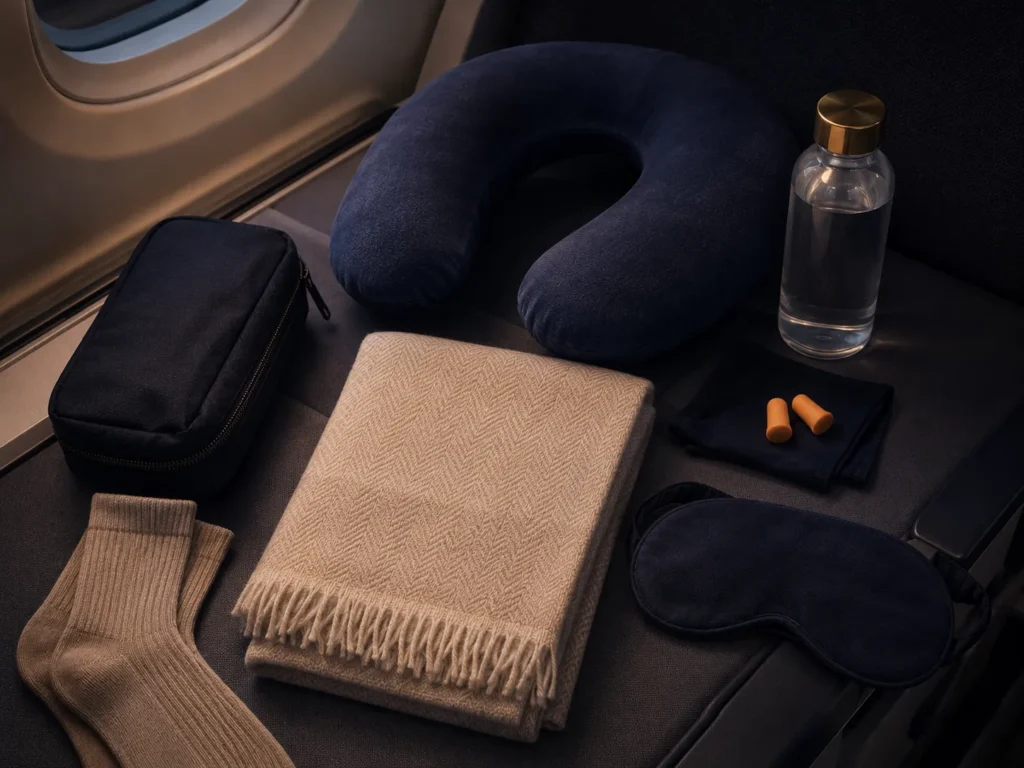
A simple travel sleep kit can include:
- Sleep mask
- Earplugs or noise-reducing headphones
- Travel pillow
- Comfortable socks
- Light sweater or extra layer
- Water bottle
- Lip balm or moisturizer
- Any personal items that help you relax
You do not need to bring everything.
The most useful items are usually the ones that solve your biggest sleep problem—whether that is light, noise, neck support, or temperature.
Should You Take Melatonin or Sleeping Pills on a Plane?
Sleep supplements and medications are not something to experiment with for the first time on a flight.
Different people respond differently, and medications can have side effects or interact with other medicines.
If you are considering melatonin, prescription sleep medication, or another sleep aid for international travel, discuss it with a qualified healthcare professional before your trip.
What Should You Do After Landing?
Good travel sleep does not end when the plane lands.
Once you reach your destination:
- Follow the local sleep schedule as soon as practical
- Spend time outside during daylight
- Stay hydrated
- Avoid sleeping for very long periods during the day
- Give yourself time to adjust after crossing multiple time zones
Natural daylight can help your body clock adjust to local time.

Final Thoughts
Sleeping on a plane will probably never feel exactly like sleeping in your own bed.
But it does not need to.
A successful travel sleep setup is about reducing the things you can control: light, noise, posture, temperature, hydration, and timing.
Start with the biggest source of discomfort, build a simple routine around it, and keep your travel sleep kit easy enough to use on every trip.
Sleep deeper. Wake clearer.
— RestWeave